
Keeping invoices organised does not need to be complicated.
One of the simplest ways to make invoicing easier is to use a clear and consistent invoice numbering system.
For example:
- INV-000001
- INV-000002
- INV-000003
It may seem like a small detail, but a good numbering system can make a real difference when you need to find an invoice, answer a customer’s question or match a payment to the correct record.
Why Invoice Numbers Matter
Every invoice should have its own unique number.
This helps you keep track of what has been issued and makes it easier to identify a specific invoice without relying only on the customer’s name, the invoice date or the amount.
A clear invoice number can help when you need to:
- search for an invoice quickly
- discuss an invoice with a customer
- match a payment to the correct invoice
- check whether an invoice has already been sent
- keep your records in the correct order
- review invoices at the end of the month or year
It can also reduce confusion where the same customer receives several invoices from your business.
Choose a Format That Is Easy to Continue
There is no need to make your invoice numbering system overly complicated.
A simple format is usually best.
For example:
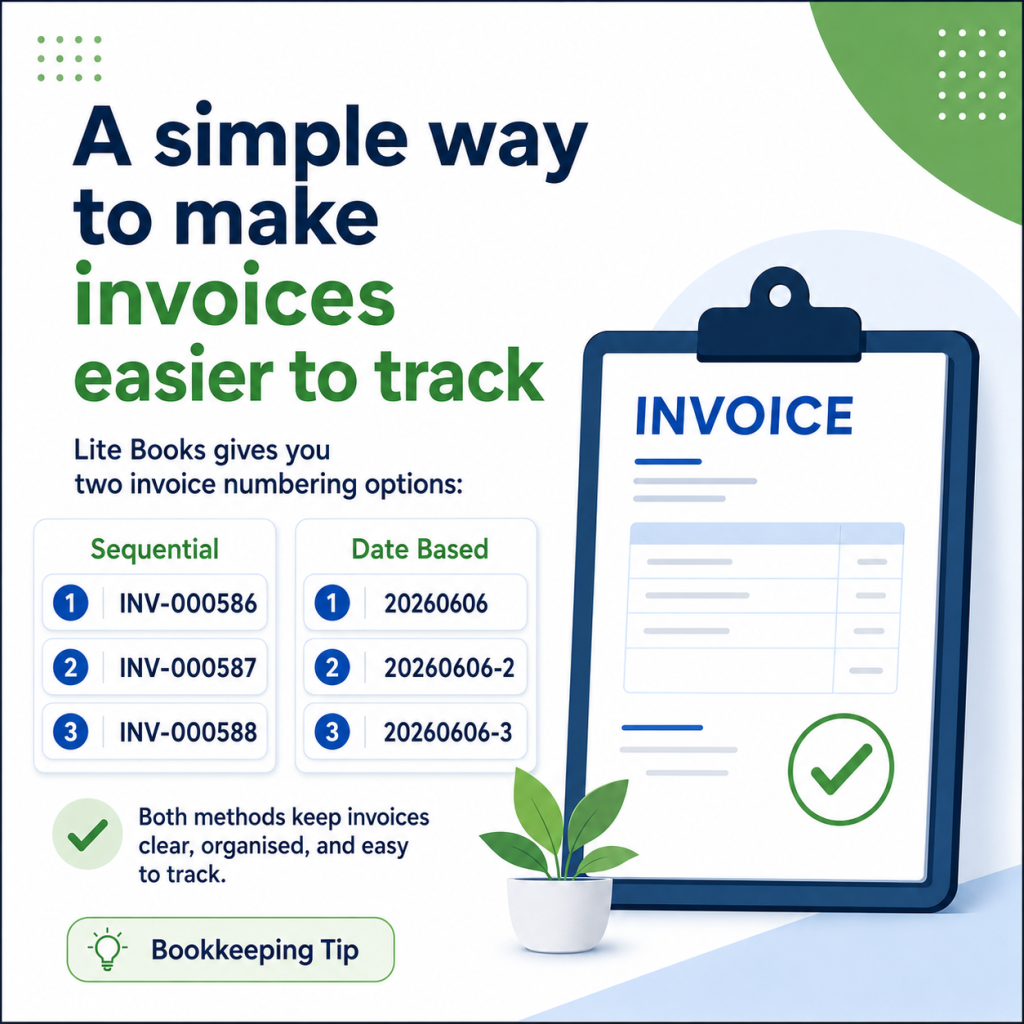
INV-000001
In this format:
- INV shows that the document is an invoice
- 001 is the invoice’s individual number
The next invoice would be INV-000002, followed by INV-000003, and so on.
Some businesses prefer to use a continuous sequence that does not restart each year, while others begin a new sequence every January.
If your business likes to be able to find invoices by date, Lite Books offers a date formatting for invoices and quotes.
INV-20260120, INV-20260120-2
In this date format:
- INV shows that the document is an invoice
- 2026 shows the year the invoice was created
- 01 shows the month (in this case January)
- 20 shows the day of the month
- -2 shows the next invoice if more than one was created on the same day
Either approach can work. The important thing is to choose a system that is clear, consistent and easy to maintain.
Avoid Reusing Invoice Numbers
Each invoice number should be unique.
Reusing the same number for different invoices can cause problems when matching payments, reviewing customer accounts or checking your records later.
If an invoice is cancelled or replaced, it is generally better to keep a record of the original document rather than deleting it and reusing its number.
This helps preserve a clear history of what happened.
Keep Quotes and Credit Notes Separate
If your business also issues quotes or credit notes, it can be helpful to use a different prefix for each type of document.
For example:
- INV-000001 for an invoice
- QUO-000001 for a quote
- CN-000001 for a credit note
This makes each document easier to recognise at a glance.
It also prevents invoices and quotes from becoming mixed together in the same sequence.
Be Consistent Across Your Business
Once you choose an invoice numbering format, use it consistently.
Avoid changing the structure regularly or using different formats for different customers unless there is a clear business reason for doing so.
Consistency makes records easier to understand for you, your customers and anyone helping with your bookkeeping.
It is also a good idea to use the invoice number when:
- sending payment reminders
- replying to customer questions
- recording payments
- adding references to bank transfers
- filing supporting documents
Small Systems Can Save a Lot of Time
Good bookkeeping often comes down to simple habits used consistently.
A clear invoice numbering system may only take a few minutes to set up, but it can save time every time you need to find an invoice, check a payment or review your records.
Lite Books automatically helps Irish sole traders and small businesses keep invoices organised, making it easier to manage records without relying on spreadsheets or manual filing systems.
A small amount of structure now can prevent a great deal of confusion later.